


Media Profile
Biopharma Beats Bulletin: Spotlight on Sue Sutter, Pink Sheet (Citeline)
Background
- Name: Sue Sutter
- Email: [email protected]
- Home Base: Northern Virginia, outside Washington, DC
- Role: Senior editor at Pink Sheet, a Citeline publication, covering drug, biologic, and vaccine regulation and policy, with a specific focus on FDA leadership, staffing, enforcement activity and litigation.
- Expertise: Sutter’s path to regulatory journalism is genuinely distinctive. She began her career at local newspapers in New Jersey before spending seven years covering litigation, including asbestos, toxic torts, and intellectual property. It was through fen phen litigation that she found her way into FDA coverage. That legal foundation shapes how she reads regulatory decisions today, bringing a procedural rigor to a beat that rewards exactly that kind of precision.
Beat Overview
- Publication: Pink Sheet has been in circulation since 1939, originally launched by FDC Reports to cover the newly enacted Food, Drug and Cosmetic Act. It was printed on pink paper so it would stand out on the desks of regulators and pharma executives. The publication has changed hands over the years, most recently becoming part of Norstella under the Citeline news and insights division. Sister publications include Scrip, Medtech Insight, HBW Insight, In Vivo and Generics Bulletin. The readership skews toward pharmaceutical and biotech executives, regulatory affairs professionals, and policy watchers who need granular, accurate coverage of the FDA landscape.
- Coverage Areas: Sutter’s beat is tightly scoped: drug, biologic, and vaccine regulation and policy, plus FDA leadership and staffing as it relates to drug and biologics oversight. Current reporting priorities include new FDA initiatives such as the Commissioner’s National Priority Voucher (CNPV) program, expedited approval pathways for rare and serious diseases, advertising and promotion enforcement, and the ongoing shifts in U.S. vaccine policy. Going forward, she will be watching CNPV approvals closely, along with the new plausible mechanism pathway and how FDA applies its updated framework allowing a single adequate and well-controlled trial in place of the traditional two.
- Angles of Interest: Sutter is drawn to the policy and regulatory mechanics behind decisions, not the commercial storylines that surround them. Advisory committee meetings have historically been a significant part of her reporting rhythm, though she notes that the pace of those meetings has slowed considerably under FDA’s current leadership. If and when adcoms pick back up, that will be a space worth watching with her in mind.
Pitching Tips
- Know the beat cold: Sutter is direct about this: “Please do your homework and research what I cover. If it’s not about drug, biologic or vaccine policy or regulation, I’m probably not interested.” That means commercial launches, M&A, early Phase 1 results, and ASCO presentations are off the table. She is not a general pharma reporter, and pitches that treat her as one will land nowhere.
- Five seconds is your window: When she opens a pitch email, you have roughly five seconds to make the case for why this story matters to her beat. That means your subject line and first sentence need to carry the full weight of the pitch. Get to the point, connect it explicitly to regulation or policy, and do not make her work to find the relevance for her readers.
- Avoid the one-size-fits-all source: “If you are pitching the same company or the same expert for any and all topics under the sun, that is not going to convince me.” Credibility with Sutter is built by knowing when your source is actually the right fit, not by putting them forward reflexively.
- Be realistic about access: Given how difficult it has become to get timely information from health agencies, Sutter is working harder than ever to confirm accurate details. If your expert or executive can genuinely add to a regulatory or policy story and is available to connect, that access matters.
Pet Peeves
- Pitching unavailable experts on breaking news: This one tops her list. “When I get a pitch about an expert who can comment on same-day breaking news, and then I am later told, often very late in the day, that expert cannot possibly talk to me today, that makes me a little crazy.” The problem shows up most often with legal experts, but also with company spokespeople and academics. If your source cannot get on the phone within a few hours of a same-day pitch, do not send it.
- Off-beat pitches disguised as relevant: Sutter is patient about it in tone, but clear in practice: pitching her a commercial launch or an early-stage data readout is a fast way to lose credibility for future conversations. Understanding the precise scope of her coverage is the baseline, not the bonus.
Events and Conferences
- FDA Advisory Committee Meetings: Adcoms have historically been a core part of Sutter’s reporting, and she notes that the pace has dropped significantly since new agency leadership arrived. One meeting took place the week before the interview, and another is scheduled for late April. She will be watching to see whether that frequency increases. For communicators with clients presenting at or responding to adcoms, Sutter is a reporter worth keeping informed.
- Washington, DC Policy Environment: Given her location and beat, Sutter is closely attuned to the ongoing regulatory and policy shifts coming out of HHS and FDA. Communicators working on issues touching vaccine policy, expedited approval pathways, or advertising enforcement should keep her in mind for any news with a D.C. policy dimension.
Key Quotes
“Please do your homework and research what I cover. If it’s not about drug, biologic or vaccine policy or regulation, I’m probably not interested.”
“You have about five seconds from the time I open an email pitch to sell me on a story.”
“It’s been very difficult to get accurate, timely information, or any information, out of health agencies, especially since most of their communications people were laid off or left voluntarily in the past year.”
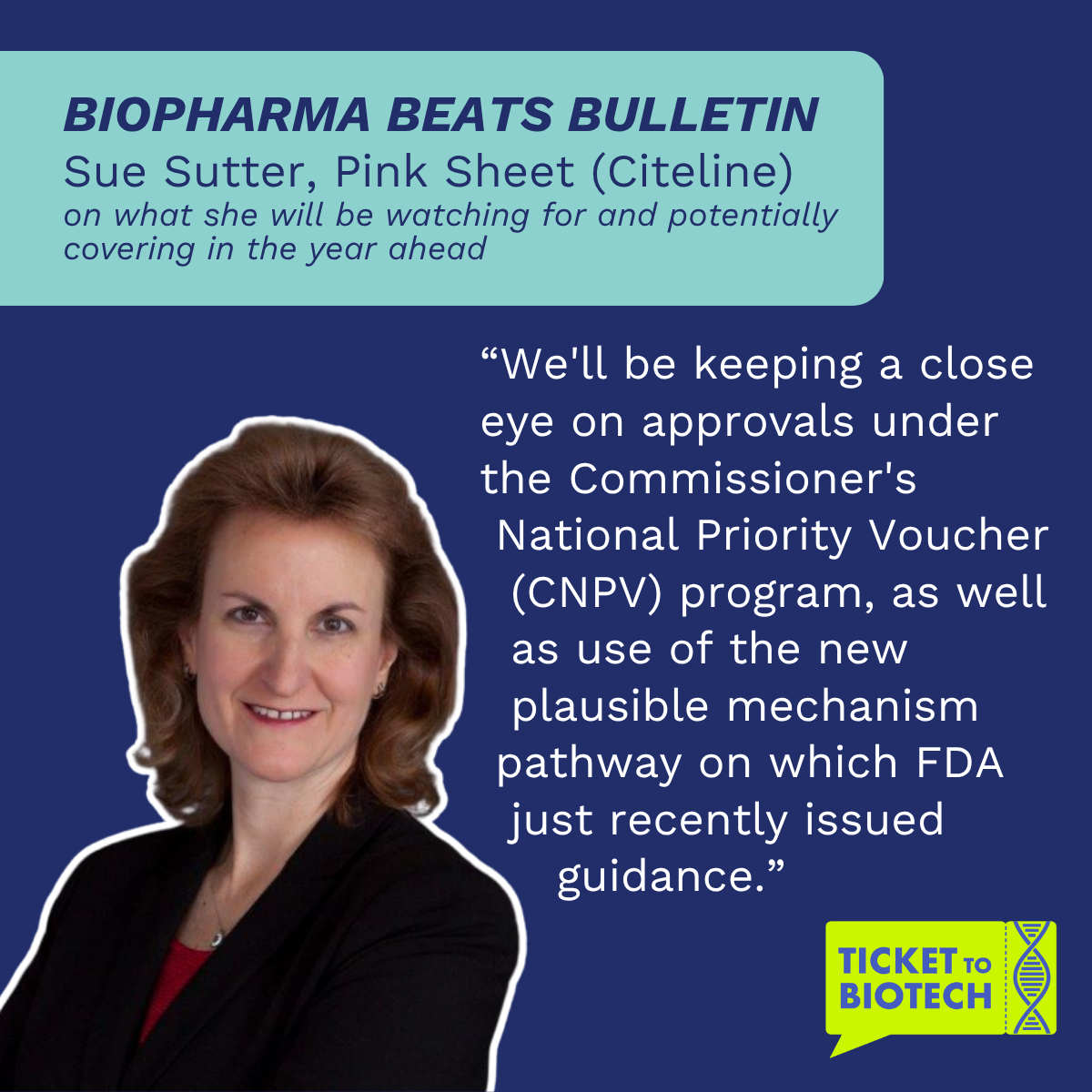
“We’ll be keeping a close eye on approvals under the CNPV program, as well as use of the new plausible mechanism pathway on which FDA just recently issued guidance.” [On what she’s tracking in the year ahead]
Lightning Round
- Daily reads: The Washington Post, plus select stories from the New York Times, Wall Street Journal, STAT News, Endpoints News and Politico.
- AI tools: Uses Copilot and ChatGPT occasionally for search questions, “with highly varying degrees of success”; also calls on Copilot for headline ideas but typically reworks the results
- Sports allegiances: Baseball first, NFL second. Go Phillies and Eagles!
- Garden priorities: Tomatoes, full stop. “I grew up in South Jersey, and my dad had a huge garden filled with tomatoes. Everything else is secondary.” Lettuce and herbs round out the plot.