


Media Profile
Biopharma Beats Bulletin: Spotlight on Maia Anderson, Senior Reporter and Founding Reporter, Healthcare Brew
Background
- Name: Maia Anderson
- Email: [email protected]
- Home Base: Minnesota (relocated from Southern California)
- Role: Maia is a Senior Reporter covering healthcare business dynamics with focus on pharmaceuticals, women’s health, digital health, and venture capital influence in healthcare.
- Expertise: Began journalism career as a freelancer for Chicago Tribune suburban papers before moving to Becker’s Hospital Review, where she covered pharmaceuticals and medical supply chain issues. After Becker’s, Maia covered the aerospace industry as a transportation fellow at Business Insider and ultimately pivoted during the pandemic to cover vaccine development and distribution, then joined Morning Brew in August 2022 to help launch Healthcare Brew as part of the founding team.As a student at Miami University, she was recognized by The Society of Professional Journalists for her story, A harsh reality for undocumented immigrants in Butler County.Healthcare Brew was recently recognized as an honoree at the 2025 Webby Awards.
Fun fact: Maia double-majored in journalism and classical piano.
Beat Overview
- Publication: A member of the Morning Brew newsletter family, which has about 4 million subscribers, Healthcare Brew reaches approximately 125,000 subscribers with thrice-weekly newsletters (Monday, Wednesday, Friday) focused on business aspects of healthcare. Their audience consists primarily of healthcare industry professionals: “We’re targeting people who work all across the industry… usually people who are more on the business side, rather than the clinical side, people who run hospitals or are at healthcare startups or VCs or working at pharma companies.”
- Coverage Areas: Pharmaceutical industry, retail pharmacy chains, drug pricing, women’s health, LGBTQ+ health, digital health, and venture capital’s role in healthcare. “All of our stories have a financial or business angle to it, rather than just covering clinical developments.”
- Angles of Interest: Second-day analysis rather than breaking news, focusing on implications and industry impact. “We try to take the news of what happened and then translate it into what that actually means for the healthcare industry. For example, things like Walgreens just got bought up by a private equity company. So what does that mean in terms of how that’s going to affect the pharmacists that work there? How is that going to affect the broader retail pharmacy market?”
- Covering healthcare in America right now: As their small reporting team works to keep up with the slew of news coming out of the new administration, Maia says they aim to be selective in their coverage by reporting facts, context and tangible consequences instead of speculating on proposed actions or breaking news that doesn’t warrant a second-day analysis story.
Pitching Tips
- Relevance to Business Audience: Ensure pitches align with their B2B focus rather than consumer health angles. “I get a ton of consumer pitches when I would hope people actually read our publication to know that we don’t cover consumer healthcare. We’re not giving tips on how to deal with things.”
- Know Who to Pitch: When hiring reporters, Healthcare Brew focuses more on letting them carve out areas of expertise for more informal beats:
- Maia focuses on the pharmacy industry, women’s health, digital health and how venture capital is shaping healthcare.
- Cassie McGrath covers hospital systems and biotech.
- Caroline Catherman covers payer and insurance issues.
- Brevity is Essential: Keep pitches concise and to the point. “If you send me an email that’s five paragraphs, I’m like, I don’t have time to be reading a bunch of really long emails. Just give me a couple quick sentences on what this is, and if I want to learn more, I’ll reach out.”
- Embargo Value: Embargoed news can be useful when relevant to their coverage. “It’s helpful because it lets us have time to pre-write. If we get the embargo, then we have time to pre-write the story and have it up by the time it comes out, which is helpful for us so we’re just not as rushed.”
Pet Peeves
- Mass Distribution: Generic pitches sent to multiple reporters without customization. “I get a lot of pitches that are clearly just an automated list. You send the same pitches to everyone on your listserv, and that’s annoying because you know that we wouldn’t cover this, but you’re just filling in my name and sending it to me anyway.”
- Irrelevant Consumer Health Topics: Content misaligned with their business focus. “I get a ton of consumer pitches when I would hope people actually read our publication to know that we don’t cover consumer healthcare. We’re not giving tips on how to deal with things.”
- Excessive Length: Overly detailed initial pitches that require too much time to process. “Really, really long pitches… if you send me an email that’s five paragraphs. I’m like, I don’t have time to be reading a bunch of really long emails.”
Events and Conferences
- CES: Annual attendance with representation from all Morning Brew professional verticals. “We send pretty much a person from every professional vertical to CES every year.”
- HLTH: Major healthcare conference regularly covered. “HLTH is so big that it’s maybe a little bit harder to get everything out of it because it’s three or four days, and there are so many people that it’s hard to kind of get everything you want out of it.”
- VIVE: More targeted healthcare event. “VIVE is like a mini-HLTH. I think that was like the one conference I went to where all of my sources—I feel like everyone I’ve ever spoken to was there.”
Key Quotes
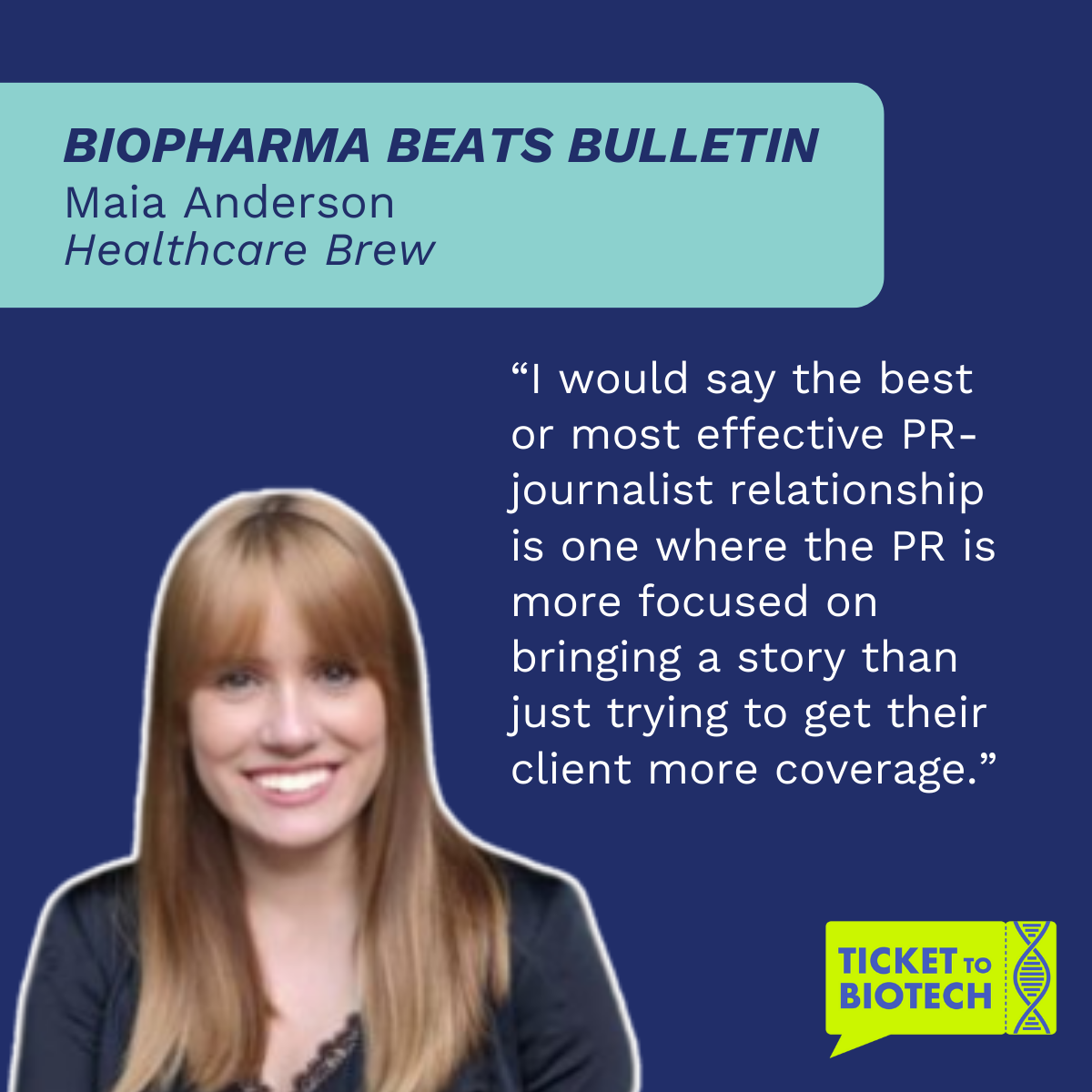
“I would say the best or most effective PR-journalist relationship is one where the PR is more focused on bringing a story than just trying to get their client more coverage.”
“Make sure you always have a firm understanding of what the story is, and maybe the why is something that gets lost a lot—why is this a story? Why does this matter? What is the impact of telling this?”
Lightning Round
- Dream Story: “I really like accountability journalism, so something where it’s very much holding power to account, and maybe in a way that affects actual change. Say a state health department was doing something nefarious and I was able to uncover that and bring that to light and then get that practice to stop.”
- Essential Tools: “We use Otter a lot because it’s really helpful to have things transcribed automatically. That’s been a game changer, saves so much time.” Also values the iPhone’s call recording feature that automatically transcribes interviews.
- Must-Read Newsletters: Follows Christina Farr’s Second Opinion, Out of Pocket, and various women’s health newsletters to stay informed on industry trends.
- Office Quirk: Got her entire team obsessed with the TV show “Severance” and regularly initiates deep discussions about theories related to the series.