


Media Profile
Biopharma Beats Bulletin: Spotlight on Andrew Han, Ion Genomics
Background
- Name: Andrew P. Han
- Email: [email protected]
- Home Base: Orange County, Calif.
- Role: Editor, Founder, Podcast Host of Ion Genomics, iongenomics.bio
- Expertise: Andrew/Ion Genomics reports on diagnostics, precision medicine and life sciences, with a focus on the science and business of DNA sequencing technologies. Before launching Ion Genomics earlier this year, Andrew spent nearly a decade covering the next-generation sequencing (NGS) industry at GenomeWeb, where he reported on the technologies, companies and scientific advances shaping the genomics market. He has also written for Popular Mechanics, Newsweek, and Wired and interned at the public radio program Science Friday, which informed the podcast component of Ion Genomics. Andrew has also managed MyChart and other web-based applications for Cleveland Clinic, Dartmouth-Hitchcock Medical Center and Children’s Memorial Hospital in Chicago. That experience provided an early view into how healthcare systems adopt and use emerging technologies, a perspective that continues to inform his reporting today. He holds a B.A. in astronomy and the history of science from Dartmouth College and a master’s degree in journalism from New York University.
Beat Overview
- Publication: Ion Genomics, is a Substack-based news site, newsletter and longform podcast focused on leaders in genomics, stories in biological research and analysis on business and policies that shape tomorrow’s science. Podcast episodes are typically hour-long conversations with executives and thought leaders in the genomics industry. Subscribers can choose to pledge monetary support of Ion Genomics or subscribe with no pledge on Substack. Some features will be paywalled to pledging subscribers. Ion Genomics’ audience includes scientists, biotech executives, investors, technology developers and others interested in the technologies and companies that are shaping the future of genomics and biology. While the Substack and podcast share the same audience, the longform podcast is a less filtered version of the source, allowing for a freer exchange with more room for speculation and levity.
- Why It Exists: Andrew launched Ion Genomics to create a more flexible platform for exploring the ideas, technologies and people shaping the future of biology. Through a mix of reporting, analysis and long-form podcast interviews, the publication allows him to pursue stories and scientific questions that may not fit neatly within the constraints of traditional trade media.
- Publishing Cadence: The Ion Genomics podcast is published on Friday mornings. The newsletter is published on Tuesday afternoons.
- Paywall Model: Eventually some content will be paywalled for premium subscribers, including paid premium versions of the podcast.
- Coverage Areas: Trends shaping research in biology including new sequencing technologies and diagnostics, bioinformatics, spatial multiomics, CRISPR genome editing and AI-based virtual cells.
- Angles of Interest: Andrew differentiates Ion Genomics through long-form conversations with scientists, founders and investors who are shaping the future of biology. He closely follows AI virtual cells, foundation models in biology, sequencing-based cancer testing and precision medicine, as well as startup funding and business strategy in genomics. From a broader perspective, Andrew is interested in the fundamental question of what genomic information can and cannot tell us. While sequencing has transformed areas such as cancer and rare disease, he believes the field is still learning where genomics provides actionable insight and where other biological measurements may be needed. “I’m constantly wondering what the genome can actually tell us,” he says. “I’m interested in stories that try to answer that question one way or another.” Following this year’s AACR meeting, Andrew became particularly interested in the growing role of molecular residual disease (MRD) tracking in solid tumors, which he views as one of the most important emerging applications of sequencing technology.
Pitching Tips
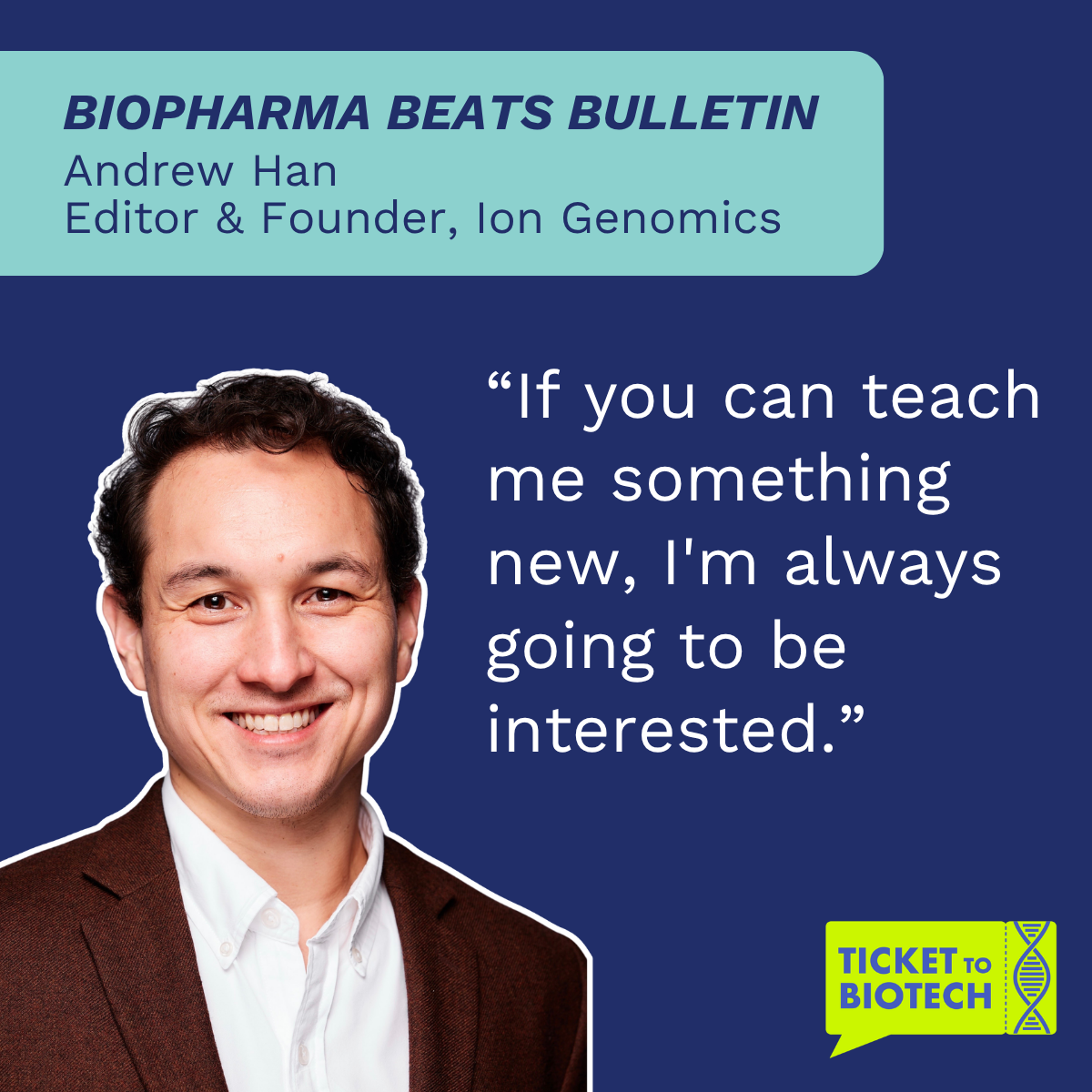
- What you pitched him at GenomeWeb is still relevant at Ion Genomics, with more flexibility: Andrew is excited to tell stories about emerging technologies, especially where AI and genomics converge, especially when there is a clear explanation of why a technology is commercially and scientifically consequential to the life sciences industry. “If you can teach me something new, I’m always going to be interested.”
- Timing and access: Email is Andrew’s preferred method to receive pitches. As an independent publisher, he is not bound by strict deadlines, so working hours are flexible.
- Expertise and candor: Andrew welcomes deep conversations with founders and scientists that go beyond the press release to magnify the “what’s next” angles in the genomics industry. Thoughtful context and analysis will resonate more than transactional announcements. Executives and researchers who can speak candidly on topics beyond their company, teaching Andrew something new on the future of genomics, product development, and scientific challenges are good candidates for Ion’s companion podcast.
- Helpful resources: Quotes or connections to third-party sources not directly affiliated with the company, such as a researcher participating in an early access program or using a newly launched product.
- Embargo policy: Before sharing embargoed news with an independently cultivated third-party source, Andrew will ask the source to accept the company’s embargo agreement before sharing information/context of the story.
- Follow-ups: Andrew doesn’t mind being followed up with on pitches he hasn’t responded to.
Pet Peeves
- Pitching people, not stories: While Andrew has relationships with life sciences boutique PR firms who understand this nuance, he gets added to industry email lists that draw pitches from firms hired by executives to raise their public profile. “I’m almost never interested. They often haven’t considered that my interests are specific.”
Events and Conferences
- Andrew is not usually interested in conference presentations, with exceptions, but definitely not the smaller conferences.
- He targets the two biggest events in the genomics technology – ASHG (American Society of Human Genetics) General Meeting and AGBT (Advances in Genome Biology)
- He has often covered the JP Morgan Healthcare conference (JPM), which has historically been important to the companies he covers in the industry. He is still considering whether he’ll attend in-person or cover remotely.
Key Quote
“I’m constantly wondering what the genome can actually tell us. I’m interested in stories that try to answer that question one way or another. If you can teach me something new, I’m always going to be interested.”
Lightning Round
- Publication that you read religiously that might surprise people: Acme Packing Company. “People who know me personally won’t be surprised. It’s a Green Bay Packers website.”
- Dream inbound pitch subject line: ‘Home sequencing is finally here.’ Andrew says he’d immediately open a pitch about a push-button DNA sequencer for consumers — a development he compares to the arrival of personal computers.
- Subject line of an email you’ll never open: ‘Executive available to discuss longevity trends.’ While Andrew supports helping people live healthier lives, he’s skeptical that many longevity-focused products and biohacking approaches address the underlying societal and behavioral factors that most influence health outcomes.
- What’s your favorite way to discover stories that aren’t being pitched? Listening to conversations. “A lot of times an offhand comment turns into the real story.” Andrew also monitors online communities such as Reddit’s r/bioinformatics and r/labrats, which often surface perspectives that differ from those of executives and principal investigators.
- What’s your level of optimism for journalism? “The truth is always useful.” While Andrew acknowledges journalists continue to navigate a nearly impossible business environment, he believes there will always be demand for accurate reporting. He sees platforms like Substack lowering the barriers for journalists to build sustainable independent publications.
- What’s one prediction you have for biotech over the next five years? AI will have a more meaningful impact in biotech than in many other industries. Andrew believes foundation models will help scientists navigate the scientific literature, analyze massive biological datasets and generate insights that accelerate discovery. “If I didn’t believe something important was going to come out of this, I wouldn’t spend my time covering it.”